
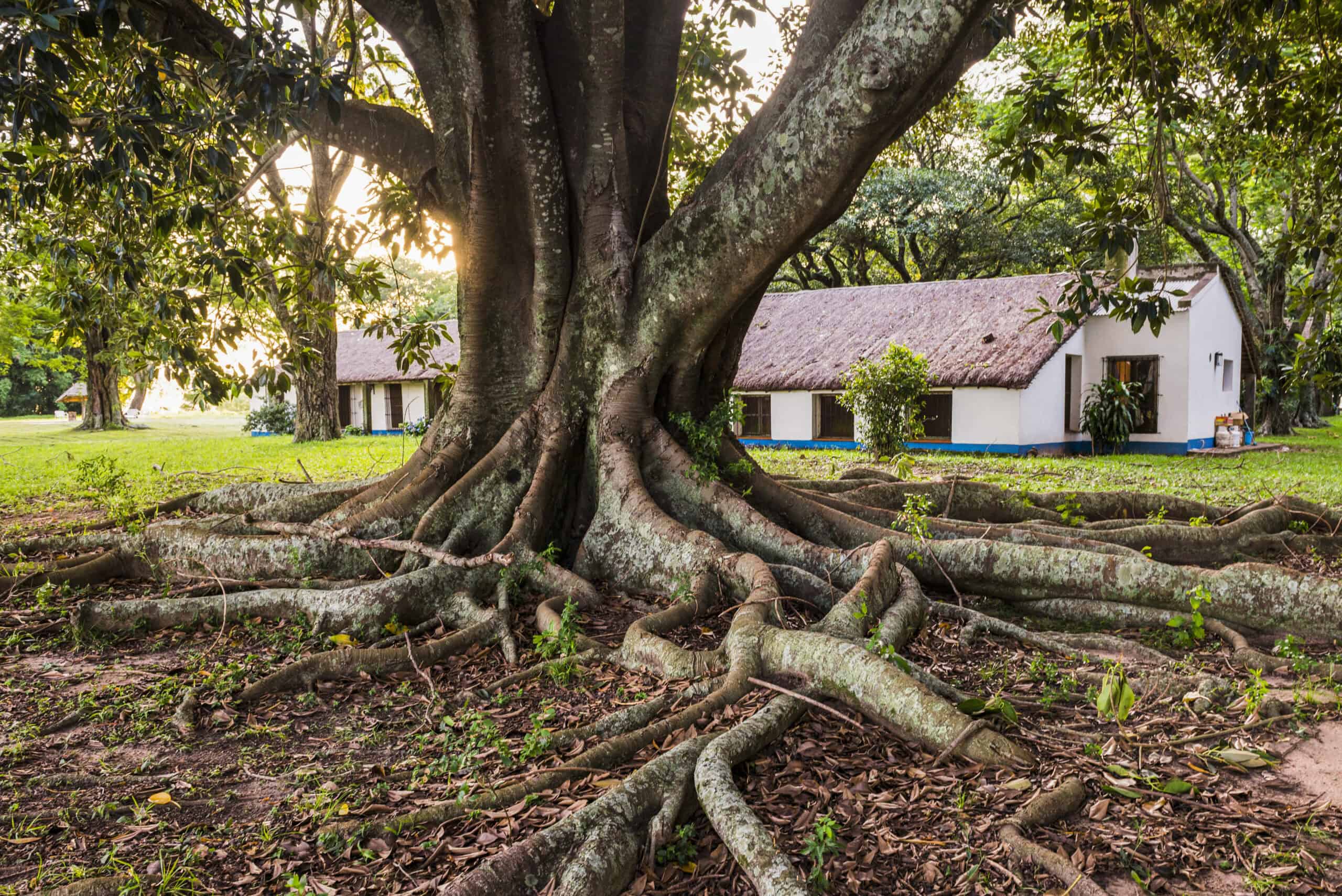
Nothing ruins the look of a beautiful driveway or patio faster than a section that’s started to lift, tilt, or crack for no obvious reason. If you’ve got mature trees anywhere near your hardscaping, there’s a good chance the culprit is growing right beneath your feet. Tree roots are patient, powerful, and more than capable of pushing even the sturdiest surfaces out of place over time.
The good news is that root damage is one of the most preventable problems in the paving world, as long as you understand how it happens and plan ahead. As a Tampa Bay paver company with over 22 years in the ground here in Florida, we’ve seen just about every root-related headache a homeowner can run into, and we know how to stop it before it starts.
Why Tree Roots and Pavers Don’t Always Get Along
Roots don’t grow in straight, predictable lines. They spread out in search of moisture and softer soil, and a compacted paver base sitting right above loose, watered soil is basically an invitation. Large trees like oaks, ficus, and southern magnolias send out shallow root systems that can stretch two to three times wider than the canopy above them.
When those roots run into a paver base, they don’t stop. They swell as they grow, and that gradual pressure builds until something has to give. Usually that something is your patio or driveway.
Signs Your Landscaping Might Be Fighting Your Hardscape
Before a full-blown heave happens, your pavers usually try to warn you. Keep an eye out for:
- Individual pavers that sit higher or lower than the ones around them
- Small gaps opening up between joints that used to be tight
- Cracking near the edges of a patio or walkway close to a tree
- Visible roots breaking the surface of nearby soil or grass
- A slight rocking feeling when you walk or drive over certain spots
Catching these early signs means a much simpler fix than waiting until an entire section needs to be pulled up and reset.
The Real Reason Pavers Handle This Better Than Concrete
This is where pavers genuinely have an edge over poured concrete, and it’s not just a sales pitch. Concrete is a single rigid slab. When a root pushes against it from underneath, the concrete has nowhere to go except up and out in a crack, and that crack is permanent. You’re looking at a full slab replacement or a patch job that never quite matches. Pavers are individual units set in sand over a compacted base, which means they flex as a system instead of failing as one solid piece. A root pushing up under a paver patio typically lifts a handful of individual pieces rather than shattering the whole surface. Those pavers can be pulled up, the root can be trimmed or rerouted, the base can be releveled, and the same pavers go right back down looking brand new.
Concrete also cracks unpredictably along stress lines that have nothing to do with where the actual problem is. With pavers, the damage stays contained to the exact spot where the root is causing trouble, which keeps repairs smaller, faster, and far less expensive. There’s also the freeze-thaw and settling argument, though it matters less here in Florida than it does up north. Even so, pavers handle ground movement from heat, humidity, and heavy summer rains better than a rigid slab because each piece can shift slightly without the whole surface failing.
Preventing Root Damage Before It Starts
Planning Around Existing Trees
If you’re installing new pavers near mature trees, distance matters more than almost anything else. As a general rule, keep hardscaping at least as far from the trunk as the tree is tall, though this varies by species. A licensed paver contractor should evaluate root spread before laying out your design, not after.
Root Barriers Make a Real Difference
A root barrier is a vertical panel installed in the ground between the tree and the paved area. It doesn’t harm the tree. It simply redirects roots downward and away from your hardscape instead of letting them travel laterally toward it. This is one of the most effective long-term prevention tools available, and it’s something we install regularly on projects throughout Tampa Bay.
Choosing the Right Base Depth
A properly compacted base with adequate depth gives roots less incentive to travel upward looking for moisture and air pockets. In Florida’s sandy soil, a base that isn’t compacted to the right specification tends to settle unevenly on its own, and that settling creates exactly the kind of loose pockets roots love to fill. Skimping on base preparation is one of the most common reasons paver surfaces fail early, root damage or not, which is why we never cut corners on this step regardless of the size of the project.
Drainage Plays a Bigger Role Than You’d Think
Roots chase water, and a paver surface with poor drainage essentially trains nearby roots to grow toward it. Standing water after a storm, downspouts that empty too close to a patio, or irrigation heads aimed at the base of a hardscape all encourage root growth exactly where you don’t want it. Grading the surrounding landscape so water moves away from pavers, rather than pooling near the edges, removes much of the incentive for roots to travel that direction in the first place.
Smart Tree Selection for New Landscaping
If you’re planning new landscaping around an existing paver patio or driveway, choose species with naturally deep or non-invasive root systems. Trees like crape myrtles, holly, and certain palm varieties are far less likely to cause future problems than fast-growing shade trees with aggressive shallow roots.
What to Do If Roots Have Already Caused Damage
If you’re already dealing with lifted or cracked pavers, don’t panic and don’t reach for a bag of quick-fix filler. The fix is usually more straightforward than people expect. A qualified paver crew will pull up the affected area, address the root itself (sometimes trimming it, sometimes installing a barrier at that point), regrade and recompact the base, and reset the original pavers. Because pavers are modular, this repair blends in seamlessly instead of leaving a patch that looks different from the rest of your driveway or patio. Trying to DIY this by simply pressure-washing and resanding the joints might make things look better for a season, but it won’t address the root pressure building underneath, and the problem will resurface.
Let’s Keep Your Landscape and Your Pavers Working Together
You shouldn’t have to choose between beautiful mature trees and a driveway or patio that stays level for decades. With the right planning, the right base work, and a little foresight about where roots are headed, both can thrive side by side.
We’ve been installing and repairing pavers throughout Tampa Bay for more than 22 years, and root management is something we handle on a regular basis, whether it’s a brand-new installation or fixing damage from a tree that’s been in the ground longer than the house. If your pavers are starting to shift, or you’re planning new hardscaping near existing trees, reach out to us for an on-site evaluation and a plan built around your specific landscape.